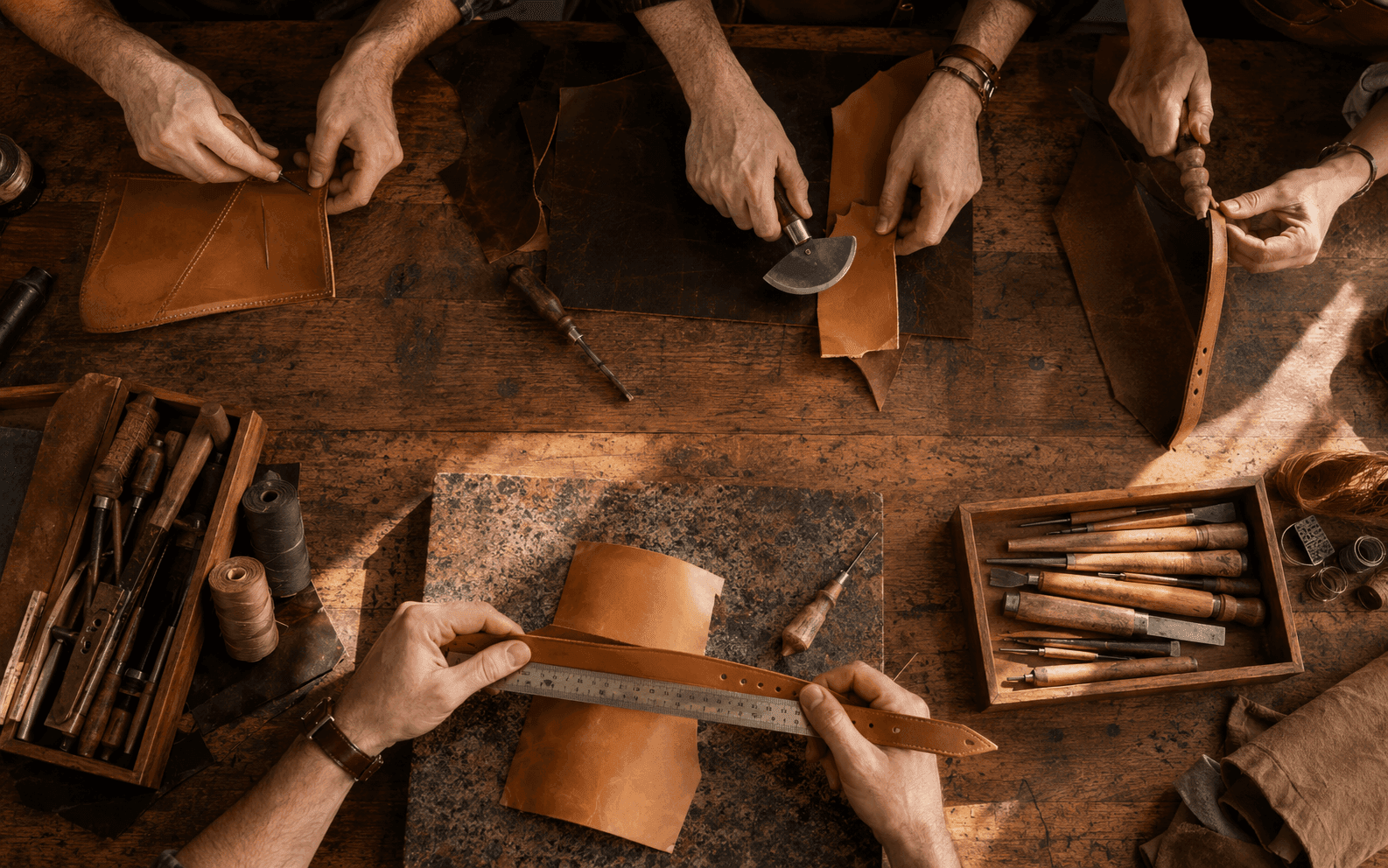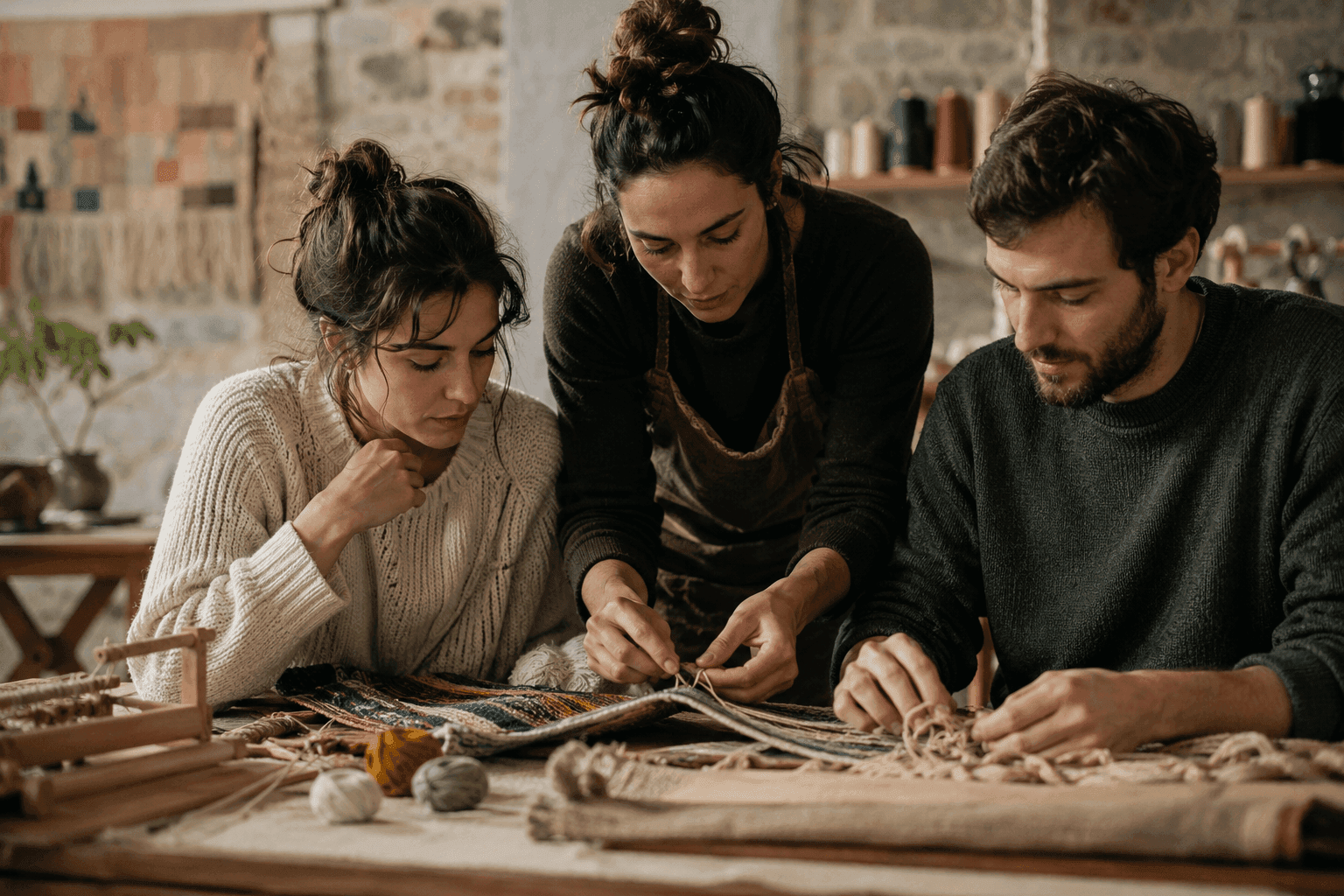
In an open workshop you don't get to choose who signs up. Almost always you end up with a mixed group: someone who has never kneaded clay or threaded a needle, someone else who's been doing it as a hobby for years. If you build the session around a single level, you lose half the room: beginners struggle, experts get bored. The good news is that bridging that gap is a technique, not a gift.
In fact, over time many artisans discover that a mixed group, led well, is even richer than a uniform one: the experts raise the bar and inspire, the beginners bring enthusiasm and fresh questions that liven up the room. The secret isn't to eliminate the gap, but to design the experience so that everyone finds their place. And much of that work is done before the session, when you think through the project and prepare the materials.
Start from a shared, flexible goal
The foundation is designing a project that works on several levels: an object a beginner completes in its essential version and that an expert can enrich with more ambitious variations. Everyone ends up with something in hand, but each at their own level. Think of the project as a simple core around which you offer 'optional challenges'.
Practical techniques during the session
- Explain the basic move to everyone, then suggest the advanced variations out loud only to those moving quickly: 'if you fancy trying something extra...'.
- Use the more experienced as allies: invite them to lend a hand to a struggling neighbour. They often do it gladly and feel valued.
- Keep an eye on individual pacing: drop by the beginners' benches more often, while the experts only need an occasional check-in.
- Prepare one or two extra activities for those who finish early: a decorative detail, a second small attempt, so they're not left twiddling their thumbs.
What to prepare beforehand, so you don't improvise later
Much of managing mixed levels is played out in the preparation, not in improvising on the spot. Arriving well equipped lets you respond to every pace without panic:
- A modular project: a basic version everyone can complete and one or two advanced variations ready to suggest out loud to whoever's flying ahead.
- Extra activities for those who finish early: an added detail, a second small attempt, so no one is left waiting for the others.
- Plenty of spare material: beginners use up and waste more, having extra avoids awkwardness and breaks in the flow.
- A couple of finished examples at different levels to show: they help everyone picture a realistic, motivating goal for themselves.
Managing emotions, not just hands
The struggling beginner mainly needs reassurance: remind them the first piece is never perfect and that this is completely normal: anticipating the typical beginner mistakes helps you calibrate this too. The expert, on the other hand, is looking for recognition and fresh stimulation: a technical challenge or an insider curiosity keeps them hooked. Reading these different needs is what turns a mixed group from a problem into a strength.
Domande frequenti
- Is it worth running separate workshops by level?
- If you have enough numbers, a dedicated 'advanced' session can make sense and is a great way to build loyalty. But most workshops stay mixed: learning to handle that is more useful than avoiding it.
- How do I stop the experts getting bored?
- Offer more ambitious optional variations, get them involved in helping their neighbours and save a few insider technical details for them. Feeling challenged and recognised is what keeps them engaged.
- And if a beginner falls too far behind?
- Step in early and hands-on: sometimes physically guiding the move once is enough. Having a completable basic activity and a time buffer stops them feeling out of place.
- How many people can I look after in a mixed group?
- It depends on the discipline and how much individual attention it needs, but with a mixed group it's best not to overdo the numbers: the wider the gap in level, the more time it takes to follow each person. Better a manageable group where everyone feels looked after than a full room where the weaker ones are left behind.
On Handsome you create your profile for free, publish your workshops and reach new people curious to learn from you.
Start teaching your craft