At some point the proposal lands: 'would you come and run a workshop at our place?' It might be a shop, a fair, a company, an event, another city. Taking your workshops on the road, outside your own studio, is a tempting prospect: new audiences, visibility, opportunities you'd never get in your own space. But it's also slippery ground, because what's simple in your studio — tools within reach, a controlled environment — becomes complicated elsewhere. A trip out can multiply your opportunities or drain your time, energy and margins. It all comes down to weighing it up with a clear head.
There's no one-size-fits-all answer: the same trip can be a great deal for one maker and a loss for another, depending on the craft, the equipment needed and the conditions. Let's look at how to decide case by case.
The hidden costs of going on the road
The first mistake is judging only by the fee offered, forgetting everything that going on the road actually involves. Before you say yes, factor in:
- Travel time: there, back, loading and unloading — hours you don't see in the fee but spend for real.
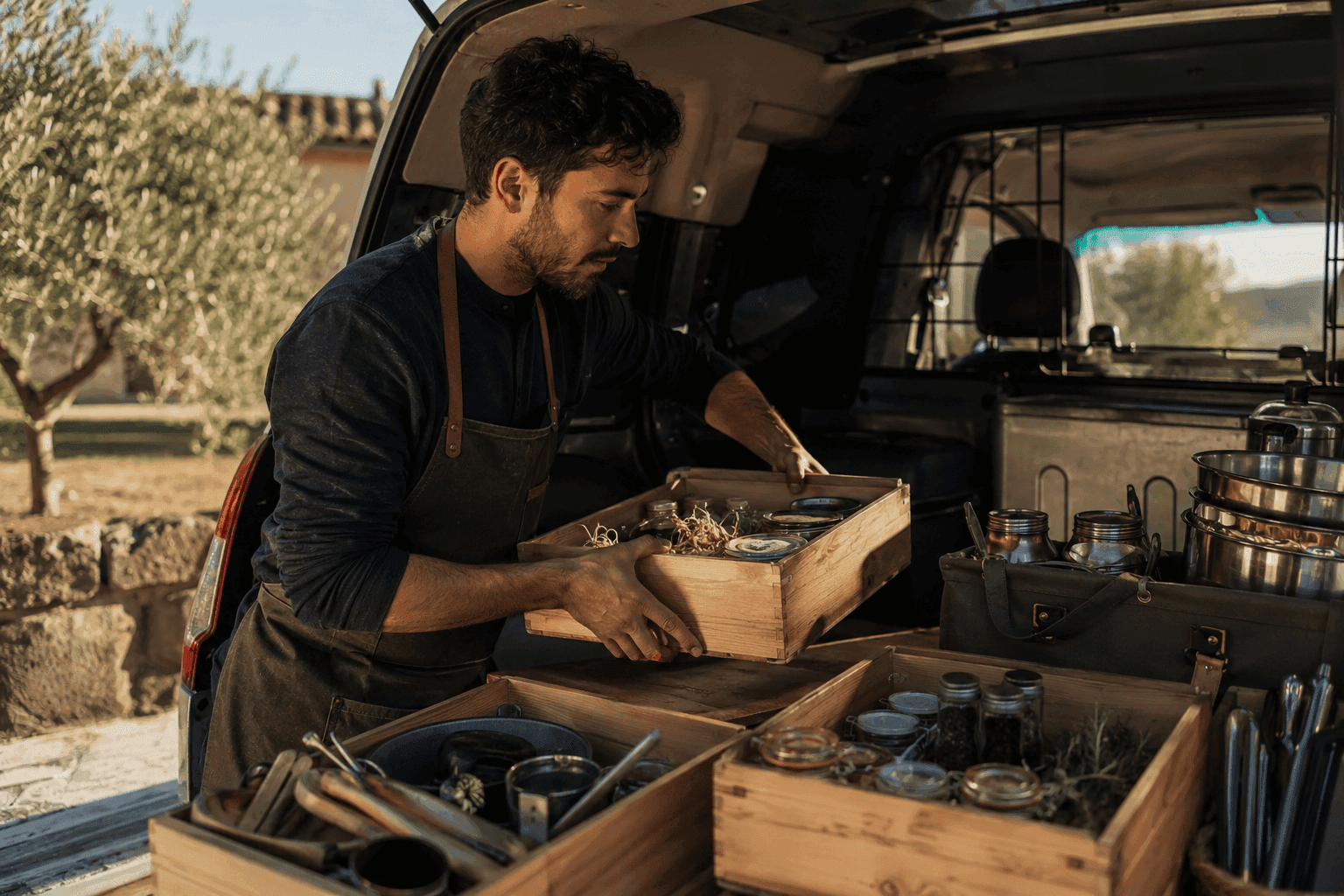
- Transporting materials and equipment: what can you move? what's too bulky or fragile?
- The unknown of the space: will you have water, power, tables, the conditions you need? You often discover the problems on site.
- Wear and risk: tools that get damaged in transit, materials that spoil, logistical surprises.
When you add up these costs, a fee that looked appealing sometimes turns out to barely break even — or run at a loss. Other times, instead, the non-financial value (visibility, contacts, a new audience) more than justifies the effort. The key is to do this maths honestly, beforehand.
When going on the road pays off
- When your craft is 'light' to move: little equipment, transportable materials (calligraphy, macramé, perfumery and candle-making lend themselves well; glass fusing, the wheel, heavy woodworking far less).
- When it brings value beyond the fee: meaningful visibility, access to a new and qualified audience, a strategic collaboration.
- When the client guarantees good conditions: an adequate space, good organisation, a fee that genuinely covers your time and costs.
- When you reach an audience that would never find their way to your studio (another city, an industry event, a company).
When it's better to say no (or counter-offer)
If your craft requires heavy equipment or conditions that are hard to recreate, if the fee doesn't cover your real costs, or if the trip takes time away from more profitable sessions in your own space, the healthiest answer is no — or a counter-offer. You can often counter: 'I can't do the wheel on the road, but I can bring a workshop in [a lighter craft],' or 'I'd be happy to do it under these conditions.' You turn a flat no into a sustainable yes.
Prepare for the trip like a pro
If you decide to accept, the difference between a successful trip and a disaster comes down to preparation. Spell out in writing what you need from the space (tables, water, power, square metres), prepare a checklist of everything you have to bring, arrive well in advance to set up without rushing, and pack a small emergency kit for the unexpected. A well-organised trip is also a fantastic showcase; an improvised one can damage your reputation in front of a brand-new audience.
Domande frequenti
- How do I tell if a trip pays off financially?
- Don't look only at the fee: add travel time, loading and unloading, the costs and wear on materials and equipment. Once you total it all up, you can judge your real earnings. Sometimes it's worth it anyway for the non-financial value (visibility, a new audience), but the maths has to be done first, and honestly.
- Is my craft suited to going on the road?
- It depends on how 'light' it is to move: calligraphy, macramé, perfumery or candle-making travel well; the wheel, glass fusing or heavy woodworking far less so. If your equipment is hard to transport, consider a simplified 'travel' version of the workshop.
- What should I check before accepting?
- The conditions of the space (tables, water, power, size), how organised the client is, and whether the fee covers your real time and costs. Ask for photos or do a site visit: never take the conditions for granted — that's the number one cause of trips that fall apart.
- Can I turn it down without losing the opportunity?
- Often yes, with a counter-offer: a craft better suited to the road, different conditions, an adequate fee. Turning a flat no into a sustainable yes keeps the relationship open without working at a loss.
Create your profile for free: publish your workshops with the location and conditions, and manage bookings and payments wherever you hold them.
Manage workshops on-site and on the road with Handsome