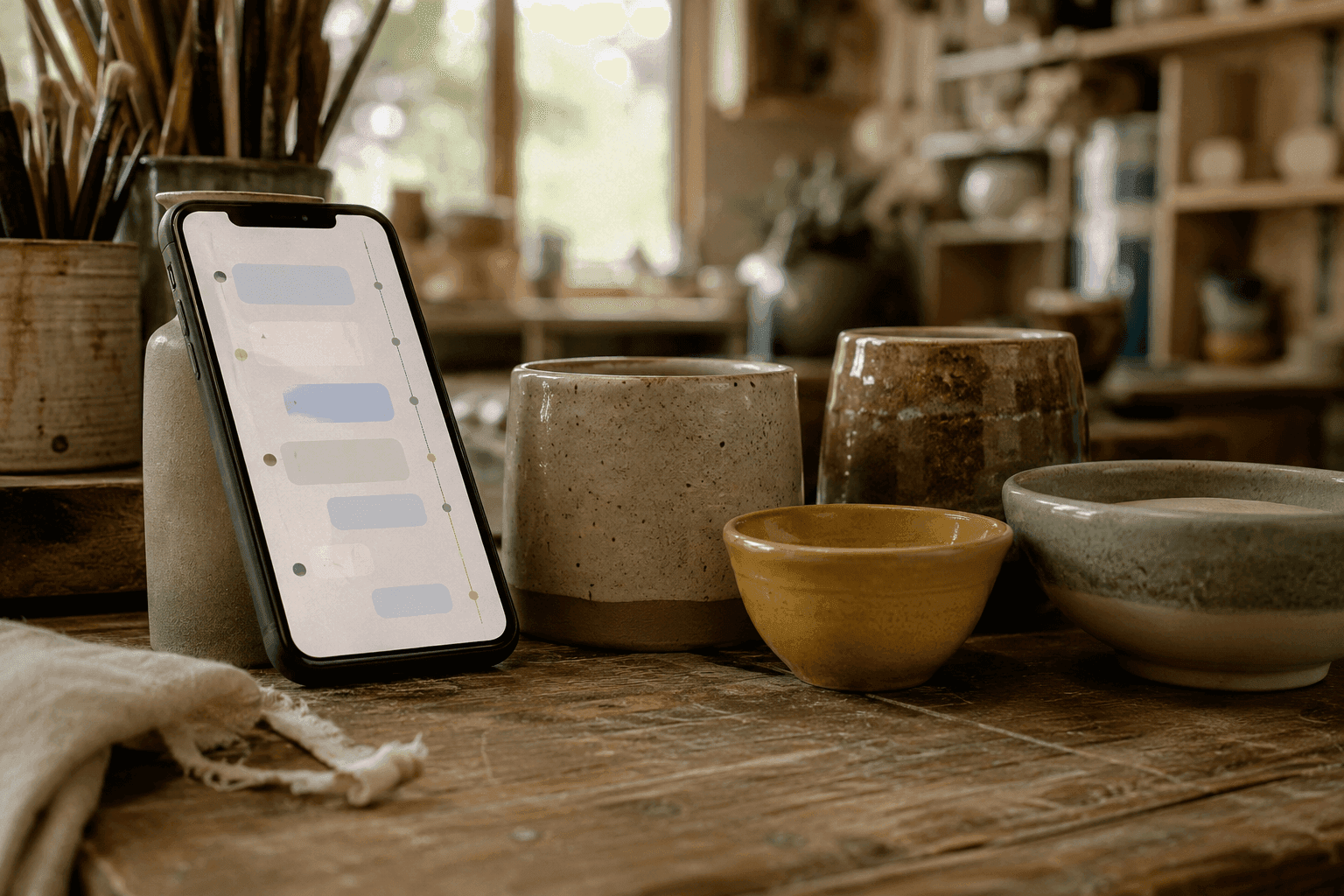
When it comes to messaging customers, the difference between an artisan who improvises and one who grows isn't in the single message, but in the sequence. Confirmation, reminder, thank-you, re-engagement: taken one by one they're useful, but it's when they link together into a thoughtful journey that they become powerful. A well-built sequence guides the person from the excitement of booking right through to a return to the studio, turning an occasional participant into a loyal customer — and all of it naturally, never intrusively.
The good news is that this sequence is designed once and then works for you on every booking. Let's look at the stages, what to say in each one, and at what pace.
The stages of the journey
- At booking → the confirmation email: welcome them, reassure them, give all the practical info. It's the first human contact after their choice.
- Before the workshop → the reminder: the day before (and a short nudge on the day itself) to reduce absences and go over the logistics.
- Right after → the thank-you: that same evening or the next day, to close on a warm note, add value and invite a review.
- A few weeks later → re-engagement: a contact with a reason (something new, a next level, a season) to open the door to a return.
Four stages, four different intentions, one common thread: making the person feel looked after and welcome at every moment of their journey with you.
The pace: present without pestering
The secret of a good sequence is the dosage. Each message must arrive when it's useful and welcome, not to fill up a calendar. Confirmation and reminder are expected and almost always welcome. The thank-you arrives at the peak of satisfaction. Re-engagement, more delicate, should be measured out: one now and then, always with a concrete reason. The rule is simple: every message must give something to the person (information, warmth, an interesting opportunity), not just ask something of them.
Personalize the points that matter
A sequence can be largely automated, but the personal details are what make it feel alive. The name, a reference to what the person created, a sincere compliment: small touches are enough to make them feel there's a person on the other side, not a piece of software. The right balance is a reliable, automatic structure, brightened by a few personal details at the key moments (the thank-you and re-engagement, above all).
Measure and improve over time
A sequence isn't carved in stone. Watch what happens: how many people show up after the reminder, how many leave a review after the thank-you, how many come back after re-engagement. Where the numbers are low, try changing the message, the timing, the tone. Improving even a single stage — for instance, recovering a few more no-shows with a better reminder — has an effect that repeats on every booking, forever.
Domande frequenti
- What are the essential stages of a message sequence?
- Four: the confirmation email at booking, the reminder before the workshop, the thank-you right after, and re-engagement a few weeks later. Each has a different intention, but together they guide the customer from the initial excitement to a return.
- Do I risk annoying people with too many messages?
- Only if the messages don't add value or come too close together. Confirmation, reminder and thank-you are expected and welcome; re-engagement should be measured out, always with a concrete reason. The rule: every message must give something, not just ask.
- Do I have to write every message by hand each time?
- No: the sequence is designed once and can be largely automated. What matters is that the messages sound human and that the key moments (thank-you and re-engagement) have a few personal touches.
- Where do I start if I don't have any sequence yet?
- With the two stages that pay off the fastest: the confirmation and the reminder. They reduce absences and make a great first impression. Then add the thank-you and finally re-engagement, building the journey step by step.
On Handsome confirmations, reminders and reviews travel automatically: the relationship with the customer grows on its own, and you focus on creating.
Let the sequence work for you on Handsome