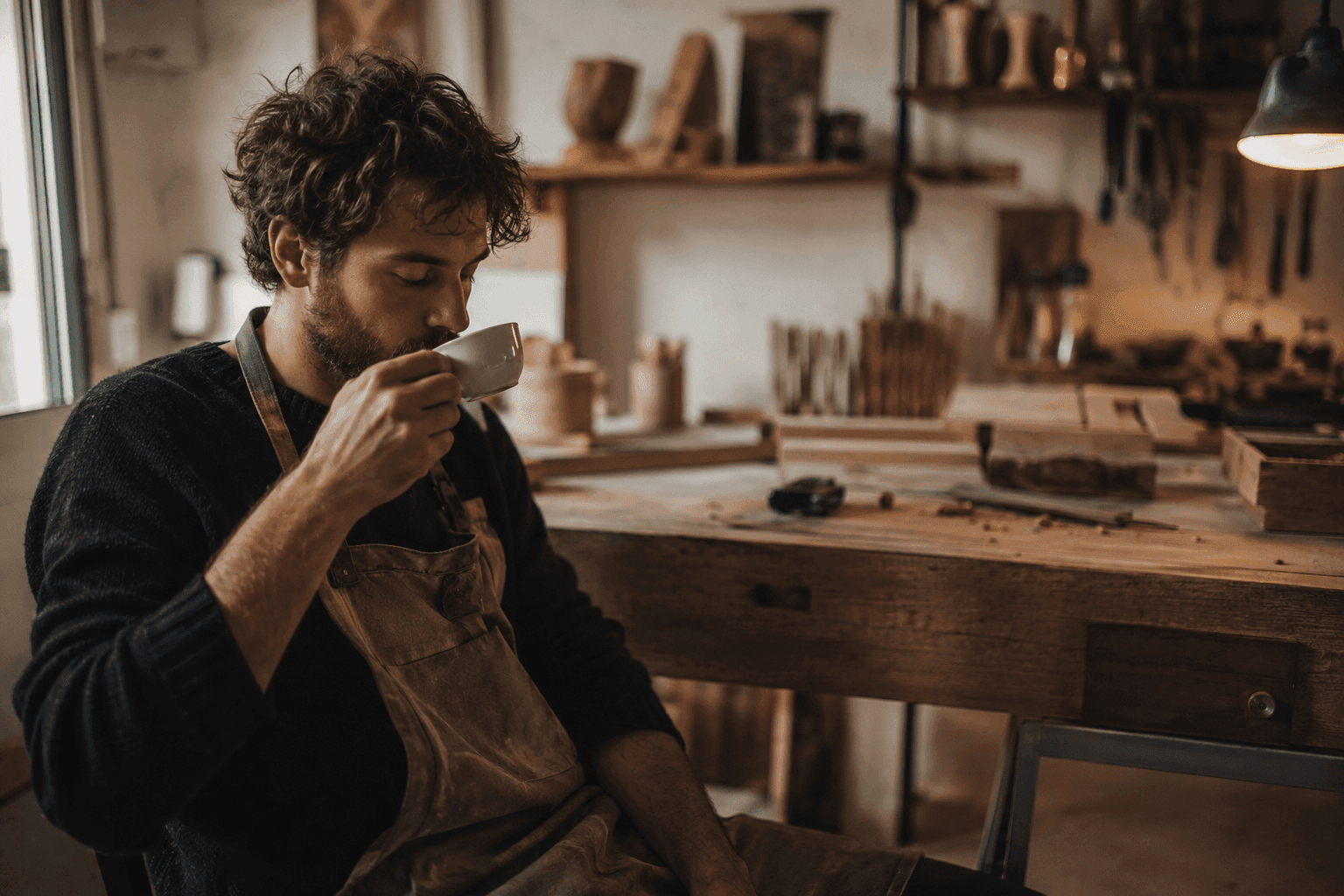
Every craftsperson has a different story, made of a unique trade, place, and character. And yet, listening to the journeys of those who started with workshops and have since made them an important part of their work, patterns and lessons emerge that recur with surprising regularity. They aren't magic rules, but recurring observations: what worked for many, and what many, with hindsight, would have done differently. Recognizing these patterns is one of the smartest ways to learn, because it lets you save years of trial and error by drawing on the experience of those who came before you.
Lesson 1: they started before they felt ready
This is perhaps the most recurring pattern. Almost everyone, looking back, says the same thing: 'I should have started sooner'. No one truly felt ready for their first workshop, and almost everyone discovers, in hindsight, that the initial fears were bigger than the real obstacles. The lesson is clear: waiting for the perfect moment is the main obstacle, and the courage to start imperfectly is what sets apart those who go on to grow from those who stay stuck dreaming.
Lesson 2: consistency beat talent
Another recurring pattern: it's not necessarily the most talented who succeed with workshops, but the most consistent. Those who kept going through the hard early months, ran sessions even with few sign-ups, and improved bit by bit have almost always overtaken people who may have been more gifted but gave up early. Growth in workshops is a marathon, not a sprint: it rewards those who stay in the race. It's a reassuring lesson, because it means you don't have to be a genius — you have to persevere.
Lesson 3: the quality of the experience did the marketing
Many describe spending little or nothing on advertising, and building almost everything on the word of mouth generated by genuinely well-crafted experiences. The recurring lesson is that the best investment isn't in promotion, but in the quality of what you offer: an enthusiastic participant is worth more than any ad, because they talk, come back, and bring others. Caring for the experience, the reviews, the relationship turned out, for many, to be more effective than any complicated marketing strategy.
- They treated their first customers as ambassadors, not as numbers.
- They gathered reviews from day one, quickly grasping their value.
- They cared for the details that make an experience memorable and worth sharing.
- They built relationships, not just transactions: and it was the community that sustained them.
Lesson 4: they asked for help and built a network
Few truly grew on their own. The role of others recurs in these stories: colleagues to compare notes with, more experienced craftspeople to learn from, collaborations that opened doors, a community that offered support in moments of doubt. Those who had the courage to ask, share, and team up grew faster than those who shut themselves off, convinced they had to do everything alone. The craft trade is individual, but for most, the path of growth was shared.
What to do with their experience, today
These lessons aren't guarantees — every journey stays unique and no one can promise results — but they're valuable pointers from people who've already walked the road. Put into practice, they say: start even if you don't feel ready, be consistent beyond the hard early months, invest in the quality of the experience more than in advertising, and don't isolate yourself. They're four choices within anyone's reach that made the difference for many before you. The best part is that you can start applying them today.
Domande frequenti
- What do craftspeople who succeeded with workshops have in common?
- Four patterns recur: they started before they felt ready, they were consistent beyond the hard early months, they invested in the quality of the experience more than in advertising, and they networked instead of isolating themselves. These are choices within anyone's reach, not innate gifts.
- Do you have to be very talented to succeed?
- No: in the recurring stories, consistency beat talent. It's not the most gifted who succeed, but the most consistent — those who kept going through the hard early months and improved bit by bit. It's a marathon that rewards those who stay in the race.
- How much advertising budget do you need at the start?
- Often very little: many built almost everything on the word of mouth generated by genuinely well-crafted experiences. The best investment isn't in promotion, but in the quality of what you offer: an enthusiastic participant talks, comes back, and brings others, worth more than any ad.
- How do I apply these lessons to my own case?
- In practice: start even if you don't feel ready, be consistent beyond the early months, care for the quality of the experience more than advertising, and don't isolate yourself, networking with other craftspeople. These are four concrete choices you can start applying today.
Create your craftsperson profile for free and start your journey: the tools to launch, grow, and build your community are already here.
Write your story on Handsome