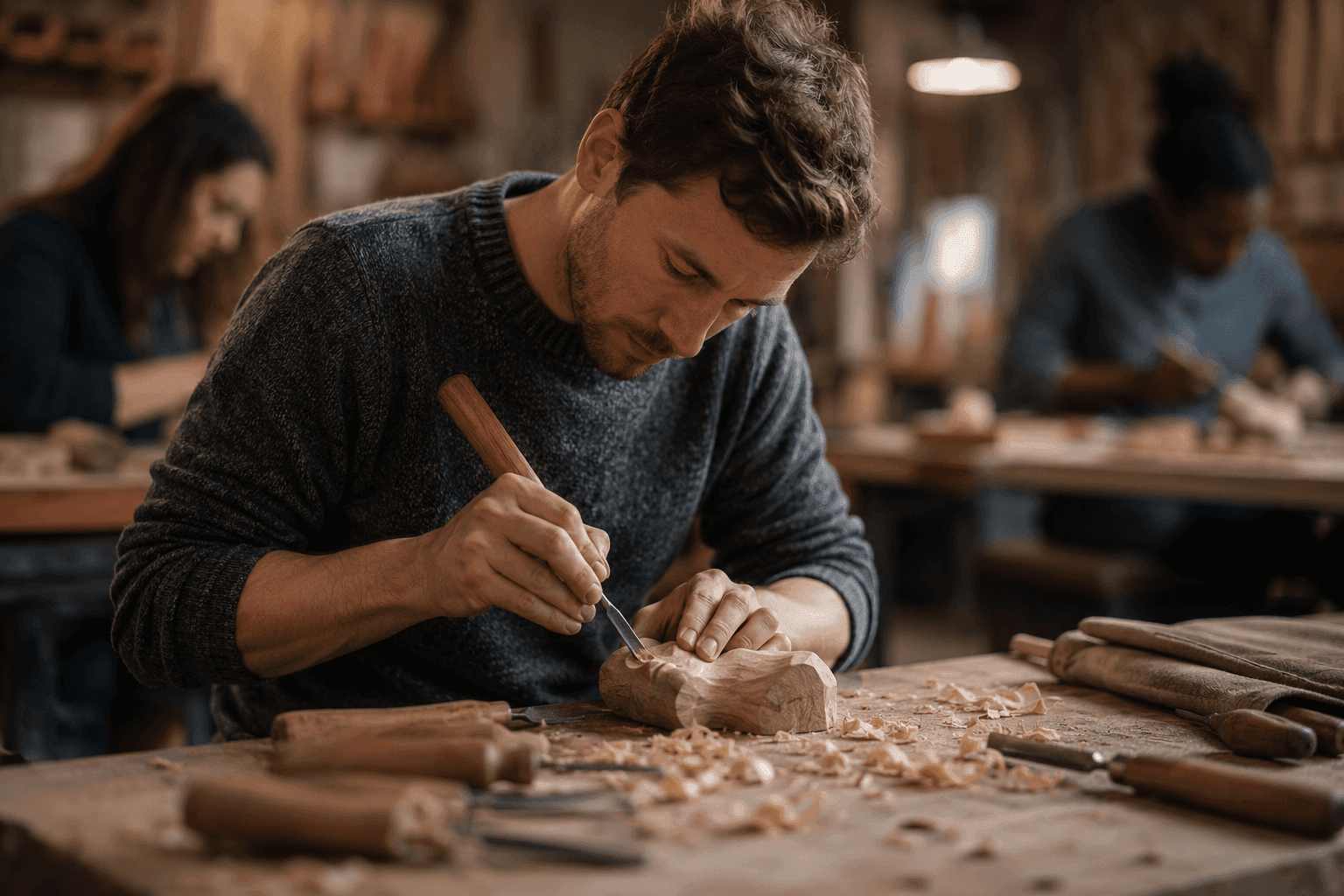
Removing material to reveal a shape is an ancient gesture, and a profoundly satisfying one. Yet carving and sculpture carry a reputation for difficulty that scares off beginners. The job of the artisan who teaches is exactly this: to choose materials and projects that deliver a real result without years of practice, and to do it in complete safety.
There's a particular charm to carving that sets it apart from other disciplines: the gesture is slow, focused, almost hypnotic, and the result emerges little by little from the raw material. For participants it's a deeply rewarding experience and a real detox from the digital — an hour spent removing shaving after shaving is true disconnection. Leaning into this dimension, not just the finished object, makes the workshop appealing to anyone looking for a hands-on, meditative activity.
Choose the right material to start with
Material makes all the difference for beginners. Wood is the most classic and gratifying choice, but it calls for care with sharp tools. For first-ever experiences or mixed groups, softer, more forgiving materials (such as soft woods or, for kids, even safer alternatives) let people learn the gesture without the risk of deep cuts. Tailor the choice to your audience.
Projects for beginners
- A carved spoon or kitchen utensil (spoon carving): a green woodworking classic, fascinating and useful.
- A small bas-relief: you work on a flat surface, so the gesture is more controlled and less risky.
- A small stylized figure or a decorative object: for anyone who wants to try sculpture in the round.
Prepare the starting point well
With beginners, starting the carving from a piece that's already roughed out or pre-shaped changes everything. The early stages — the ones where you remove a lot of material — are the most tiring, slow and at times risky: taking them on yourself beforehand, or providing a block that's already partly worked, lets participants focus on the rewarding part — shaping and finishing — and take home a great result within the time of the session. It's the same principle as pre-cut leather or pre-warped looms: preparing the starting point is what makes a 'difficult' discipline accessible as a workshop.
Teach people to 'read' the material
A precious part of carving is learning to follow the grain of the wood, to sense where the fibre lets you work and where it resists. Passing on this sensitivity turns the workshop from a simple hands-on activity into a small dialogue with the material. It's also what stays with people most: the discovery that the material 'speaks' and should be worked with, not forced.
Domande frequenti
- Is carving dangerous for beginners?
- The tools are sharp, so safety is central: you carve away from the body, with clear demonstrations and constant supervision, and cut-resistant gloves if needed. With these precautions it's a safe workshop and perfectly suited to beginners.
- Which project should I choose for a first workshop?
- The carved spoon is the best-loved classic: useful, fascinating and completable with the right guidance. A bas-relief is another excellent choice, because the gesture is more controlled.
- Does it take a lot of physical strength?
- No: technique and reading the material count for more than strength. With well-sharpened tools and the right gesture, carving is accessible to almost everyone, adapting the project and material to your audience.
- Can I offer carving even to people who don't want to use sharp blades?
- Yes: for more cautious audiences, families or children, you can use softer, more forgiving materials and less risky tools, adapting the project. The experience of 'shaping by removing material' stays fascinating even with a gentler, safer approach: the key is to calibrate material and tools to your audience.
Create your profile for free and put your carving workshops in front of people looking for an authentic hands-on experience.
Shape your bookings on Handsome