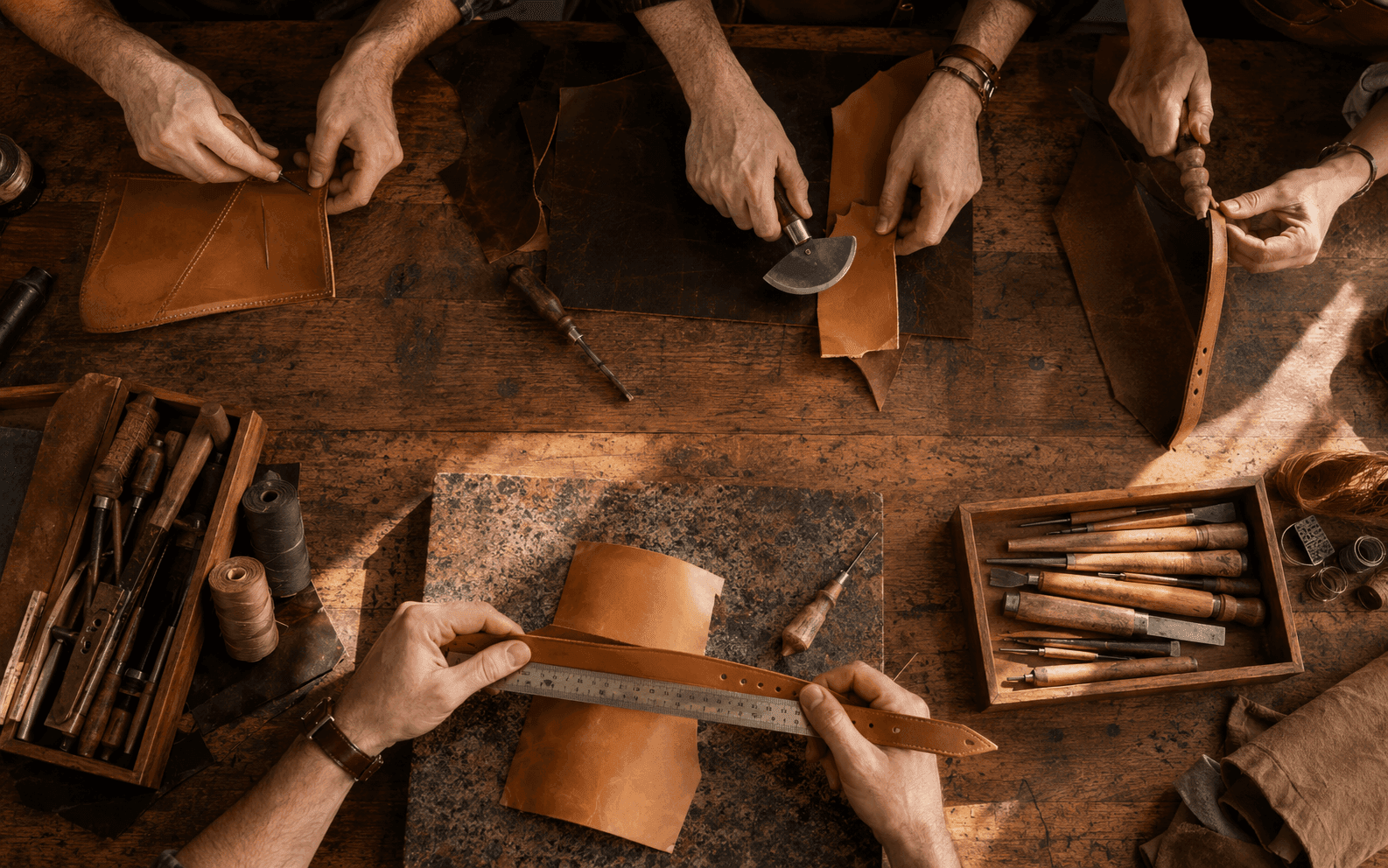
Leatherworking has a tactile appeal that's hard to match: the smell of the hide, the texture under your fingers, the rhythmic gesture of hand-stitching. It's a workshop that speaks to the senses and produces an object meant to last for years — one that often improves with use. The challenge is choosing a project that genuinely fits into a single session, because working leather properly takes time.
Leatherworking also sits naturally at a higher value level: leather is perceived as a noble, durable material, the opposite of disposable. A handmade leather object signals craftsmanship and quality, and that lets the workshop sit in a higher price bracket than 'cheaper' crafts. People who choose a leatherworking experience are often after exactly this: a beautiful object built to last, made with their own hands.
Choose a small, finishable object
For a single session, aim for small objects with few stitches but plenty of satisfaction. These are the projects that work best for beginners:
- A cardholder or card wallet: few stitches, an elegant result, useful every day.
- A keychain or a bookmark: ideal for short sessions or first-ever attempts.
- A small pouch or case: introduces stitching the sides and the closure.
- A belt: if you have more time, a made-to-measure object that's much appreciated.
The heart of the workshop: the saddle stitch
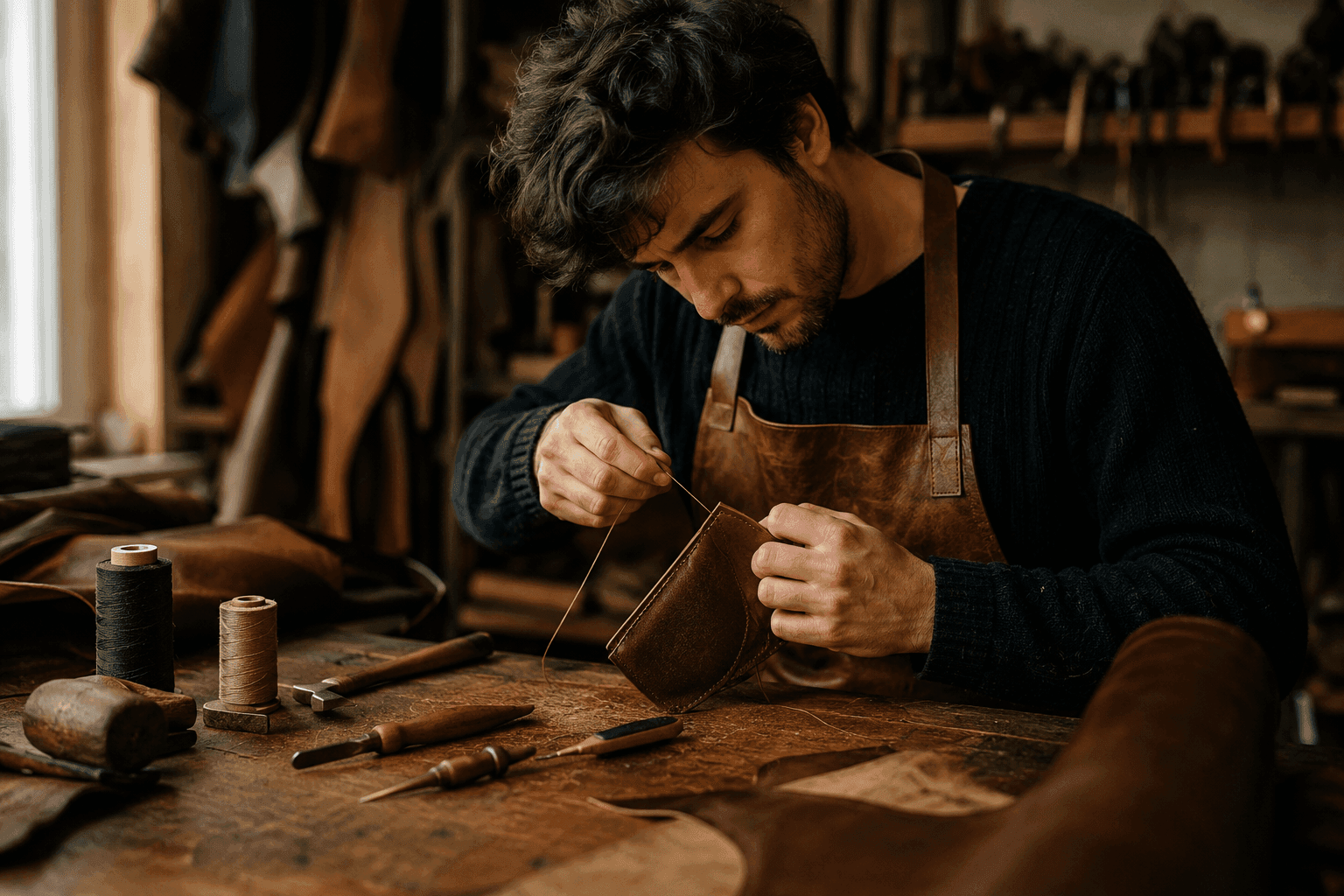
The saddle stitch, done by hand with two needles, is the queen of artisan leatherworking techniques: sturdy, beautiful and surprisingly meditative. For beginners, prepare the leather already cut and with the holes pre-punched or marked: precise cutting and punching are the steps that take the most experience and equipment. That way the session focuses on stitching and finishing, which are the rewarding parts.
The slow pace is part of the experience
One feature of the saddle stitch is that it's slow and repetitive, and that should be framed as a value, not a drawback. In a hectic world, spending a couple of hours stitching by hand, stitch after stitch, is an almost meditative experience, a real disconnect. Many participants discover the gesture relaxes them as much as the result satisfies them. Pitching the workshop as a 'slow break' too makes it appealing to people who want not just to learn, but to switch off — an ever-growing audience.
Tell the story of the material
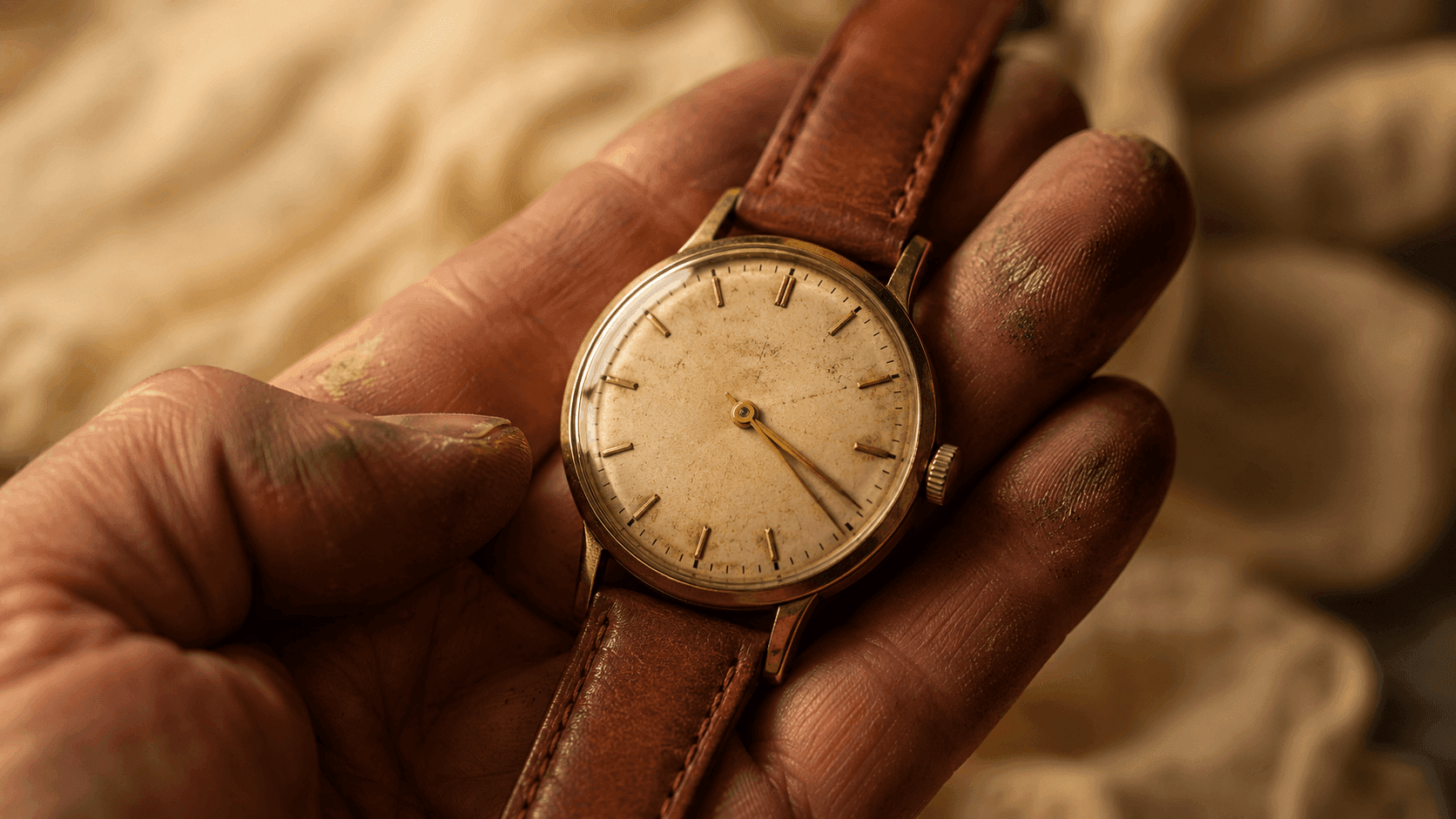
Leather is not all the same: full grain, vegetable tanning, provenance. Explaining what participants are working with raises the perceived value and justifies the workshop's price. Quality leather ages well and develops a patina: explaining this turns the object from a souvenir into something people will use and love over time.
Domande frequenti
- Do you need experience to hand-stitch leather?
- No: the saddle stitch can be learned in a single session, especially if you provide the leather already cut and punched. It's a repetitive, relaxing gesture that's hugely satisfying even for complete beginners.
- Which object should I choose for a first workshop?
- Something small and useful: a cardholder, a keychain or a pouch. The goal is for everyone to finish a well-crafted object within the session, edge finishing included.
- Should I have participants cut the leather?
- For a single session it's better to provide it already cut and with the holes marked: cutting and punching take experience and equipment. That way the workshop focuses on stitching and finishing, the most rewarding parts.
- How much can a leatherworking workshop cost?
- It generally sits in a mid-to-high bracket, because quality leather has a real cost and high perceived value, and the finished object is built to last. Tie the price transparently to the type of leather and the object: someone making a full-grain leather wallet is happy to accept a higher price than someone making a simple keychain.
On Handsome you create your profile for free and put your leather workshops in front of people looking for an authentic artisan experience.
Open your leatherworking workshop