The scented-candle workshop has won over a huge audience, and for good reasons: it's accessible to anyone, deeply sensory, highly customizable, and sends people home with a beautiful object to keep or give away. It's also a format that lends itself to nights out with friends, bachelorette parties, and events. Structuring it well means balancing the creative side (scent and personalization) with a few technical precautions.
Part of its success is that it combines two pleasures: the creative one of composing a fragrance and the almost therapeutic one of pouring the wax and watching an object take shape. And the result becomes part of daily life — a candle you light at home, that scents the room and recalls the experience every time. It's a workshop with a low technical barrier but high emotional engagement: the perfect combination for a broad audience.
Choose your wax and explain the differences
There are several types of wax (soy, vegetable, beeswax, paraffin), each with its own performance, scent throw, and look. Part of the workshop's appeal is precisely in telling these differences: for exact fragrance ratios and working temperatures, always follow the instructions from the maker of the wax and fragrances you use, because they vary from product to product. Conveying this attention makes you come across as the expert you are.
The typical session structure
- Introduction: types of wax, how a candle works, what makes a fragrance balanced.
- Choosing and composing the scent: the most engaging moment, where each person creates their own fragrance.
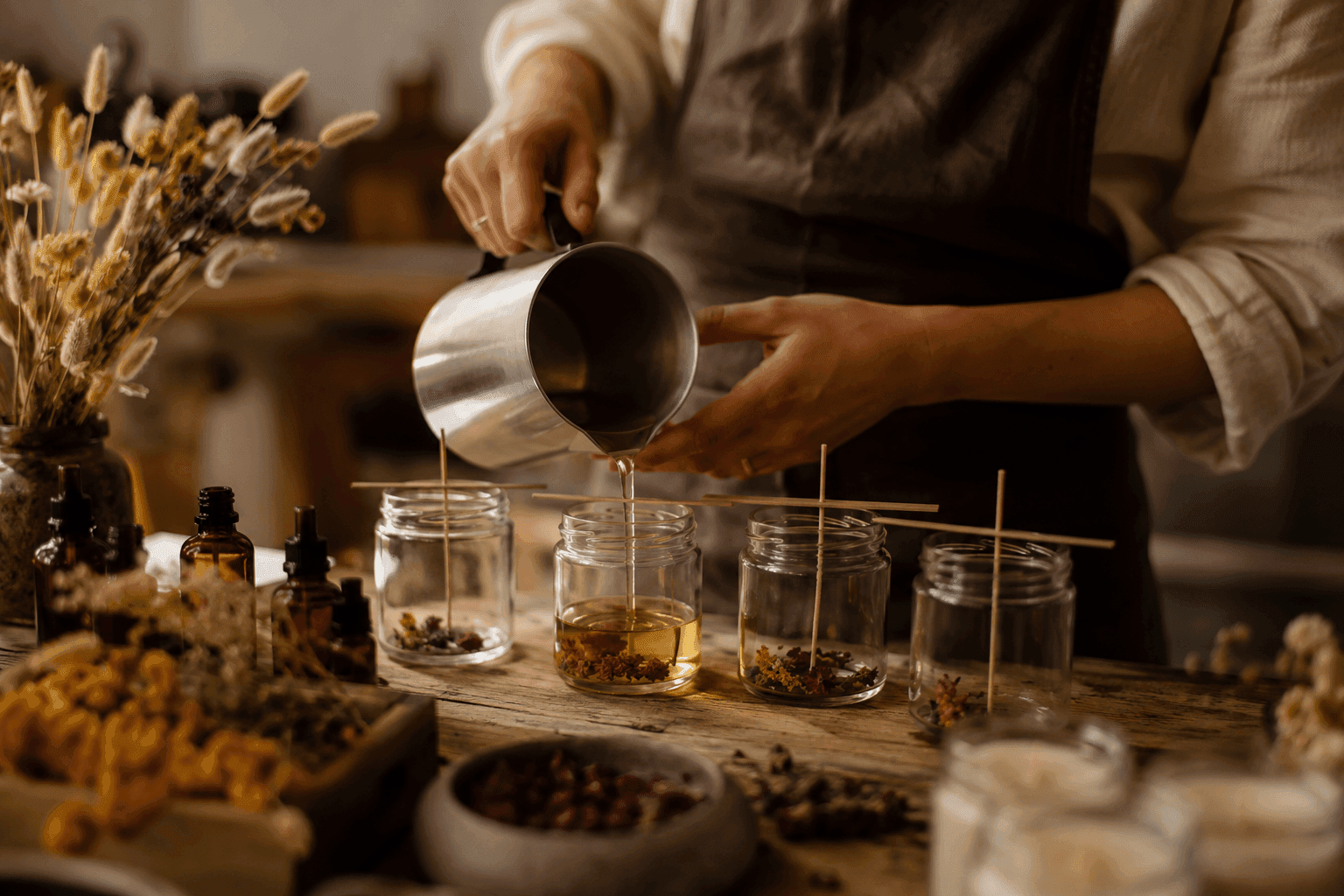
- Pouring and personalizing: you pour the wax, set the wick, and personalize the container.
- Cooling and finishing: while the candle sets, you work on labels, decorations, and packaging.
What you need to get started (less than you think)
One of the advantages of the candle workshop is the low barrier to entry: the equipment you need is modest and relatively inexpensive compared with other disciplines. You essentially need waxes, fragrances, wicks, containers, something to melt and pour the wax safely, and a good scent selection. This also makes the candle workshop one of the easiest to take on the road — to people's homes, into shops, to events — opening up occasions well beyond your own studio.
Lean into personalization
The real value of this workshop is personalization: the chosen scent, the color, the container, the label. The more room you give individual creativity, the more unique and memorable the experience becomes. Set out a little 'scent library' of fragrances and let people compose their own: that's the emotional heart of the session.
Domande frequenti
- How much fragrance should go into the wax?
- The right amount depends on the type of wax and fragrance: always follow the maker's instructions, since they vary from product to product. Overdoing it doesn't make the candle smell stronger and can actually hurt its performance.
- Which wax is best for a workshop?
- Vegetable waxes like soy are very popular in workshops because they're easy to work with and well-liked by the public. The choice depends on the effect you want and the story you build around the product: what matters is mastering its characteristics.
- Is the candle workshop suited to events and groups?
- Very much so: it's accessible, convivial, and highly customizable, so it works great for nights out with friends, bachelorette parties, and team building. The sensory side makes it engaging for everyone.
- Can I expand my offering beyond candles?
- Yes, and it often pays off: with related materials and skills you can also offer diffusers, wax melts, scented tablets, or soaps. Varying your products keeps the lineup fresh for repeat guests and lets you create themed editions and new booking occasions, all while staying in the sensory world your audience loves.
Create your profile for free and publish your candle workshops: reach people looking for a sensory experience and an original gift idea.
Light up your bookings on Handsome